
Sewer Line Repair in Sherwood, OR
OVERVIEWSewer Line Repair in Sherwood, OR
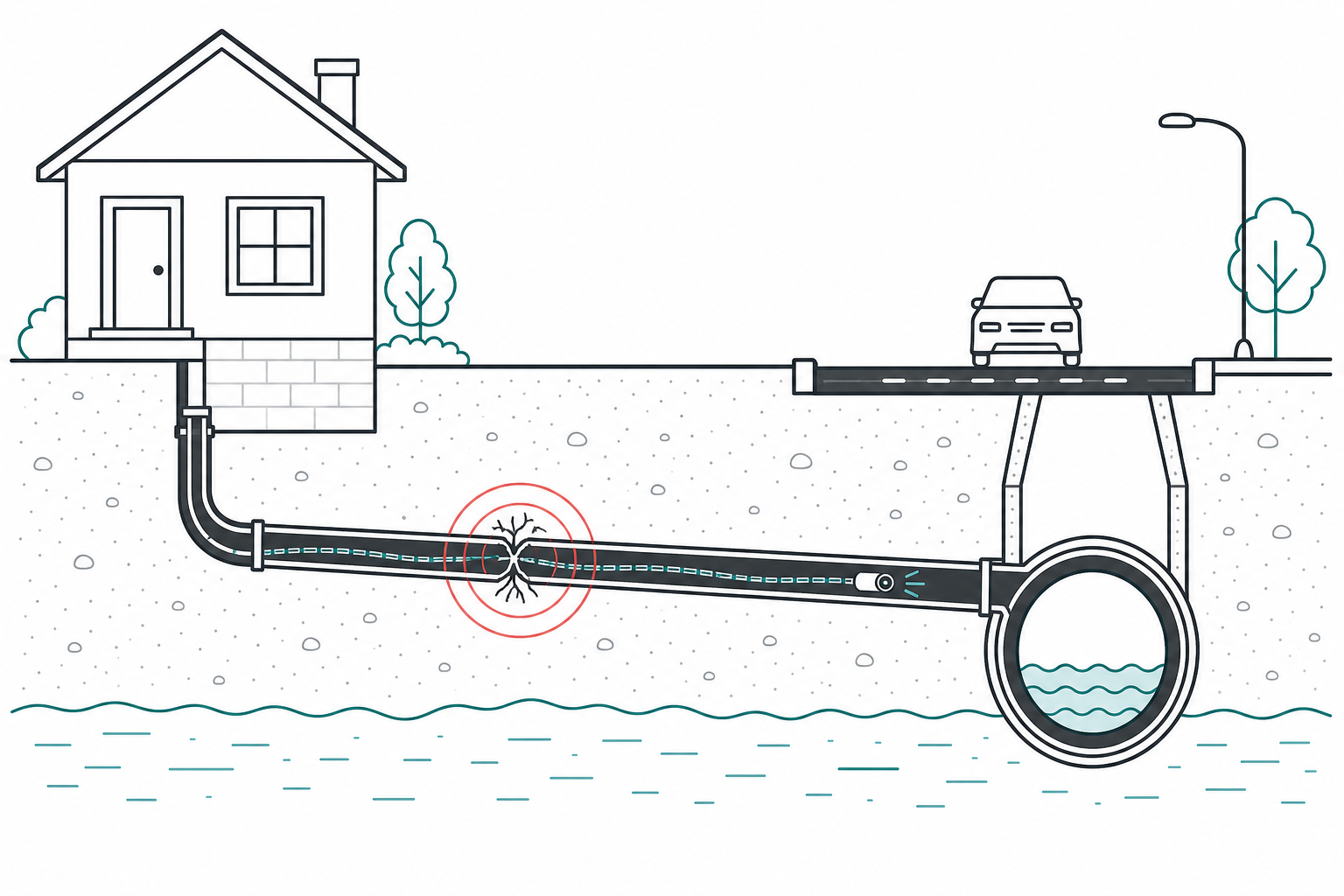
Sherwood Plumbing diagnoses and repairs sewer line problems — root intrusion, bellied pipe, cracks, and collapses — across Sherwood, Tualatin, Tigard, and Washington County, always with a camera inspection before any repair. The sewer line, also called the sewer lateral, is the underground pipe that runs from your house to the city main or septic tank. It’s the hardest-working pipe on the property and the one you never think about until something goes wrong. When it fails, the signs are loud: multiple fixtures backing up at once, wastewater coming up through a floor drain or shower, gurgling in toilets, or a section of yard that stays wet when the rest is dry.
Sewer work is where smart diagnosis matters most. A repair on the wrong section, or a repair done on a pipe that needed full replacement, is expensive and doesn’t last. We camera every sewer line before we recommend a fix. You see the footage. You understand what’s down there. The repair follows the evidence.
NEED A PLUMBER NOW?Call or text (503) 822-5070
WHAT YOU NEED TO KNOWWhat are the most common sewer line problems?
The most common sewer line problems are tree root intrusion, bellied or sagged pipe, cracked or collapsed pipe, grease and scale buildup, and building-drain clogs mistaken for sewer issues.
Tree root intrusion
The most common sewer issue in Sherwood-area neighborhoods with mature trees. Roots find any small gap or crack in the pipe (or any joint in older clay lateral), work in, and eventually form a fibrous plug that slows flow and traps debris. Cable and hydro-jet can clear roots temporarily, but they come back unless the entry point is fixed.
For recurring root intrusion we recommend either spot repair of the damaged section (if roots are entering at one joint) or pipe lining / trenchless replacement (if roots are entering at multiple points or the pipe itself is compromised).
Bellied or sagged pipe
Soil settles over decades. A sewer line that was laid flat in 1975 may now have a low spot that holds standing water and collects sediment. You see it on camera as a pool of water in the middle of a run. Minor bellies sometimes stabilize; significant ones need excavation and re-laying that section with proper bedding.
Cracked, offset, or collapsed pipe
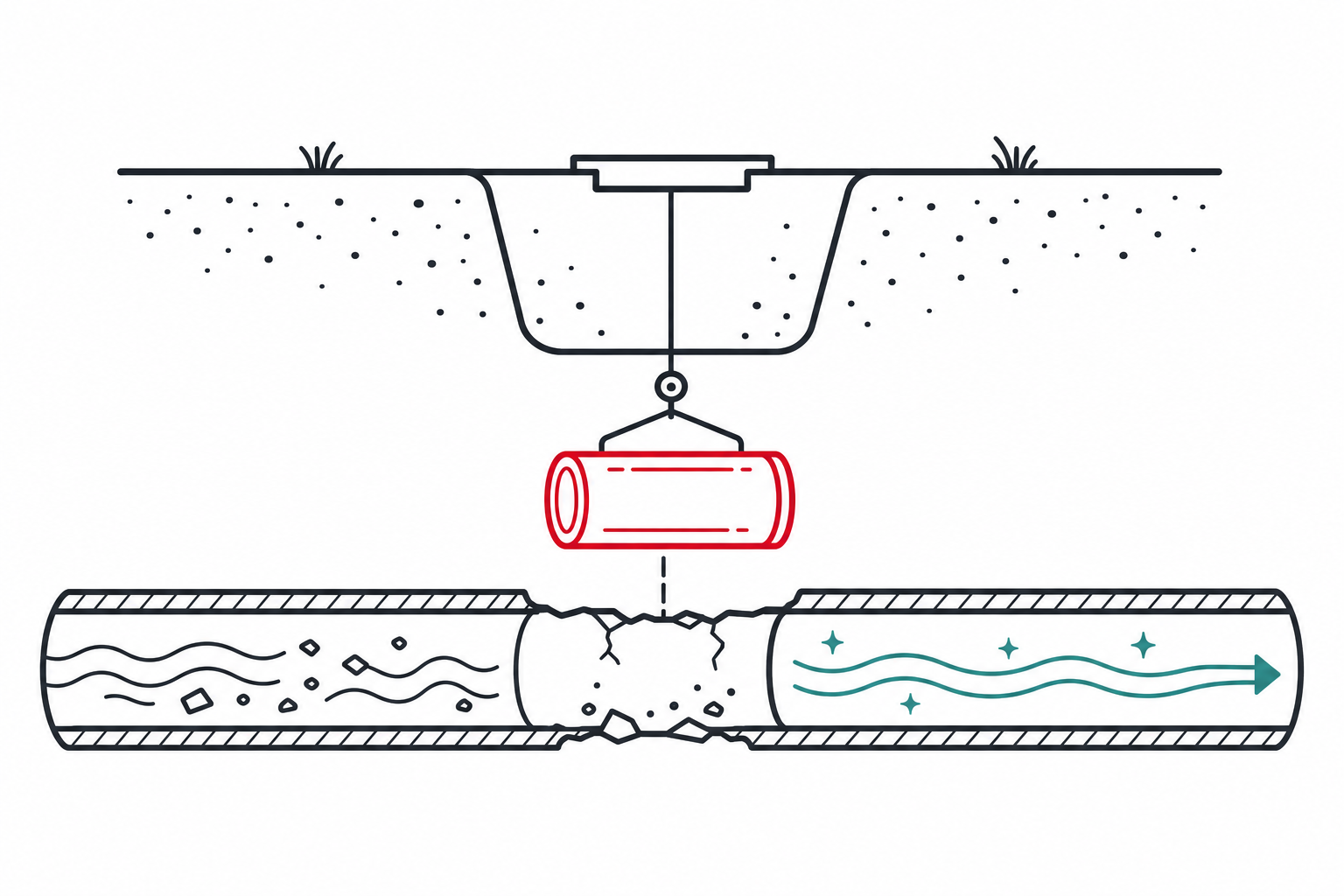
Clay laterals, orangeburg (a pressed-paper pipe used in midcentury builds — still common in parts of older Sherwood and Tigard), and early PVC can all fail from soil movement, freeze-thaw cycles, or root pressure. A full collapse stops everything. A crack or offset joint lets groundwater in and sewage out, which eventually backs up into the house.
Grease and scale buildup
Less common in residential than commercial, but it happens. A main line that’s been receiving years of kitchen grease can narrow to half its interior diameter. Hydro-jetting can clear it, but only if the pipe itself is sound.
Main line clogs that aren’t actually the sewer
Sometimes what looks like a sewer issue is a clog in the 3- or 4-inch building drain inside the house, before the line exits the foundation. The camera tells us which, and the fix is different for each.
GOOD TO KNOWWhat's the difference between trenchless and traditional sewer repair?
Traditional dig-and-replace excavates and replaces the pipe, while trenchless methods (lining, bursting, or spot repair) fix or replace the line with little to no yard disruption. Traditional dig-and-replace involves excavating the yard to expose the existing line, removing it, and laying new PVC or ABS. Reliable, well-understood, and the right call when the line is badly collapsed, has multiple failed sections, or is at a depth where trenchless isn’t practical. The downside is yard disruption. Sod, landscaping, concrete paths, and hardscape have to come out and go back.
Trenchless repair covers a few methods:
- Pipe lining (CIPP). A resin-soaked liner is pulled through the existing pipe and cured in place, forming a new pipe inside the old one. Works when the existing host pipe is sound enough to hold the liner and the line has no major offsets or collapses.
- Pipe bursting. A bursting head is pulled through the old line, breaking it outward while simultaneously pulling in a new HDPE pipe. Works even if the existing line is badly failed. Needs two access pits (one at each end) but no trench between.
- Spot repair. For a single bad joint or short compromised section, we excavate just that section and replace it rather than the whole line.
Trenchless almost always costs more per foot than a traditional dig, but the savings on yard restoration, concrete replacement, and landscape rebuild can flip the total cost in trenchless’s favor for lines running under driveways, patios, or established gardens. The right method depends on the camera findings and the site layout. We explain the options with actual numbers before you decide.
OUR PROCESSHow does a sewer line repair visit work?
We camera the line to diagnose the problem, show you the footage, and give you a written repair quote before any digging starts. Call or text (503) 822-5070.
For a suspected sewer problem, we show up with the camera and cleanout access equipment. If the yard has no exterior cleanout, we pull the toilet closest to the main line or access through a roof vent. Camera down, document the findings, mark the location and depth of any problem with a sonde so we know exactly where to dig or burst if it comes to that.
Clear footage, written diagnosis, options for the repair. Nothing happens until you say yes.
On repair day: traditional dig means excavation crew, shoring if depth requires it, replacement of the run, backfill, cleanup. Trenchless means access pits, liner or bursting equipment, cure or pull time, then backfill and restoration.
Payment at the end: credit card or check.
OUR PROCESSWhy choose Sherwood Plumbing for sewer line work?
We’re built for real-estate-driven sewer work — fast turnaround, camera documentation you can share, and a written quote before any excavation — backed by Devin’s local soil and pipe-material knowledge since 2013. Sewer-line work is where Devin says we earn our keep. Roughly 99% of the sewer-repair calls we get are tied to real-estate transactions — a buyer’s home inspector flagged something on the camera scope, a seller wants to disclose cleanly, a closing date is two weeks out and the line needs to be solid before it goes through. We’ve shaped how we run those visits around what real-estate professionals and homebuyers actually need: fast turnaround, an electronic recording they can share, a written quote on the repair before excavation.
Every sewer repair we perform is verified by a follow-up camera inspection. That gives the buyer or seller documentation that the work actually solved the problem — useful in disclosure, useful for the next transaction.
We solve problems other shops walk away from. Trenchless on a partially collapsed orangeburg lateral. Spot repair on a 70-year-old clay line where roots are entering at three different joints. The kind of diagnosis that takes 20 minutes when you’ve worked the local soil for 20 years, and two hours when you haven’t. Devin’s been doing this since before he started Sherwood Plumbing in 2013.
ABOUT SHERWOOD PLUMBINGAbout the shop
Sherwood Plumbing has been running since 2013 under Devin Drew Adams. We’re headquartered in Sherwood, the only plumbing company actually based in town. Our techs know the housing stock around here: the 1970s gas tank in a Sherwood ranch, the 2015 tankless in a Villebois build, the electric tank in a Cedar Hills postwar home. That local knowledge is the difference between a diagnosis that takes 20 minutes and one that takes two hours.
We carry $1,000,000 in general liability insurance with Federated Mutual. Oregon CCB license #200851 (Plumbing, Residential RGC General Contractor). PB1381 with the Oregon Building Codes Division. $25,000 surety bond through Contractors Bonding & Insurance. 220 Google reviews at 4.7 stars.
FREQUENTLY ASKED QUESTIONSFrequently asked questions
We don’t quote sewer work over the phone. Spot repair of a single bad joint, full lateral replacement, and trenchless lining are very different price points, and the camera inspection is what tells us which is appropriate. We come out, run the camera, show you the footage, and give you a written quote before any excavation starts. For service-call repairs you’re billed on completion. For larger projects (full lateral replacement, trenchless bursting, anything that runs longer than a single service-call window) we collect a deposit at the start and work through a milestone pay schedule.
For a one-time clog that clears easily and doesn’t return, no. For any recurring main-line issue, yes. Otherwise we’d be guessing at the cause, and sewer repairs are too expensive to guess on. Every sewer repair we perform is verified by a follow-up camera inspection — that’s not a separate line item, it’s how we confirm the work actually solved the problem.
Yes — most often for real-estate transactions. We come out, run the camera, and hand you an electronic recording you can share with the buyer, seller, agent, or title company. The scope is quoted on-site once we see the cleanout location and access. See our real-estate transaction plumbing page for the full deliverable.
Better for the landscape, often more expensive per foot, and only appropriate for certain kinds of damage. A collapsed orangeburg line isn’t a good candidate for lining. A cracked but otherwise intact clay line under a driveway is a strong candidate. The camera footage drives the recommendation.
Most residential sewer laterals in this area run between 3 and 6 feet below grade, sometimes deeper at the street connection. Depth affects cost because deeper trenches need shoring and more excavation time.
Yes. Sewer lateral work is permitted in every jurisdiction we serve. We handle the permit and coordinate the inspection.