
Pipe Repair & Replacement in Sherwood, OR
OVERVIEWPipe Repair & Replacement in Sherwood, OR
Sherwood Plumbing repairs and replaces copper, PEX, and galvanized pipe — from a single burst-pipe fix to a full-house repipe — across Sherwood, Tualatin, Tigard, Beaverton, Wilsonville, and Newberg. Pipe work ranges from a 30-minute repair on a single failed joint to a multi-day full-house repipe. What determines the scope: material, age, how the failure is distributed, and how accessible the pipe is. We handle the whole range across Sherwood, Tualatin, Tigard, Beaverton, Wilsonville, and Newberg.
NEED A PLUMBER NOW?Call or text (503) 822-5070
WHAT YOU NEED TO KNOWWhy do pipes fail in Oregon homes?
Pipe failures in our service area typically trace back to the home’s era — galvanized steel in pre-1960s homes, copper pinhole leaks in 1960s-1990s homes, and PEX fitting issues in post-2000 builds.
The typical housing stock in our service area falls into three broad pipe eras:
Pre-1960s homes. Often originally plumbed in galvanized steel. Most of these have been at least partially repiped by now, but we still find stretches of original galvanized feeding second-floor bathrooms in older Sherwood and Tigard homes. Galvanized restricts flow as the interior corrodes and eventually pinhole-leaks.
1960s through 1990s. Copper, mostly type M. Copper is a great material overall but gets pinhole leaks after 30 to 50 years depending on water chemistry. Pinholes show up as pencil-point-sized weeps on horizontal runs, often in attics or crawlspaces.
Post-2000 builds. PEX is now the default in new construction (including most of Villebois and Charbonneau). PEX doesn’t pinhole like copper, but early PEX-A fittings and certain brass fittings had higher failure rates. If you have a home built between 2003 and 2010, pay attention to fitting-related leaks.
GOOD TO KNOWWhat pipe repair and replacement services does Sherwood Plumbing offer?
We repair burst pipes, pinhole leaks, galvanized and PEX lines, prevent frozen-pipe damage, and replace water mains.
Burst pipe repair
Hard freezes in Oregon are uncommon but not rare, and when pipes freeze and burst, the resulting water damage happens fast. First priority: shut off the main water supply at the street-side shut-off (if you have one) or the main shut-off inside the house. Second: call us. We cut out the burst section, replace with like-for-like or better material, and pressure-test. We don’t do water restoration, but we can recommend someone who does.
Pinhole leak repair (copper)
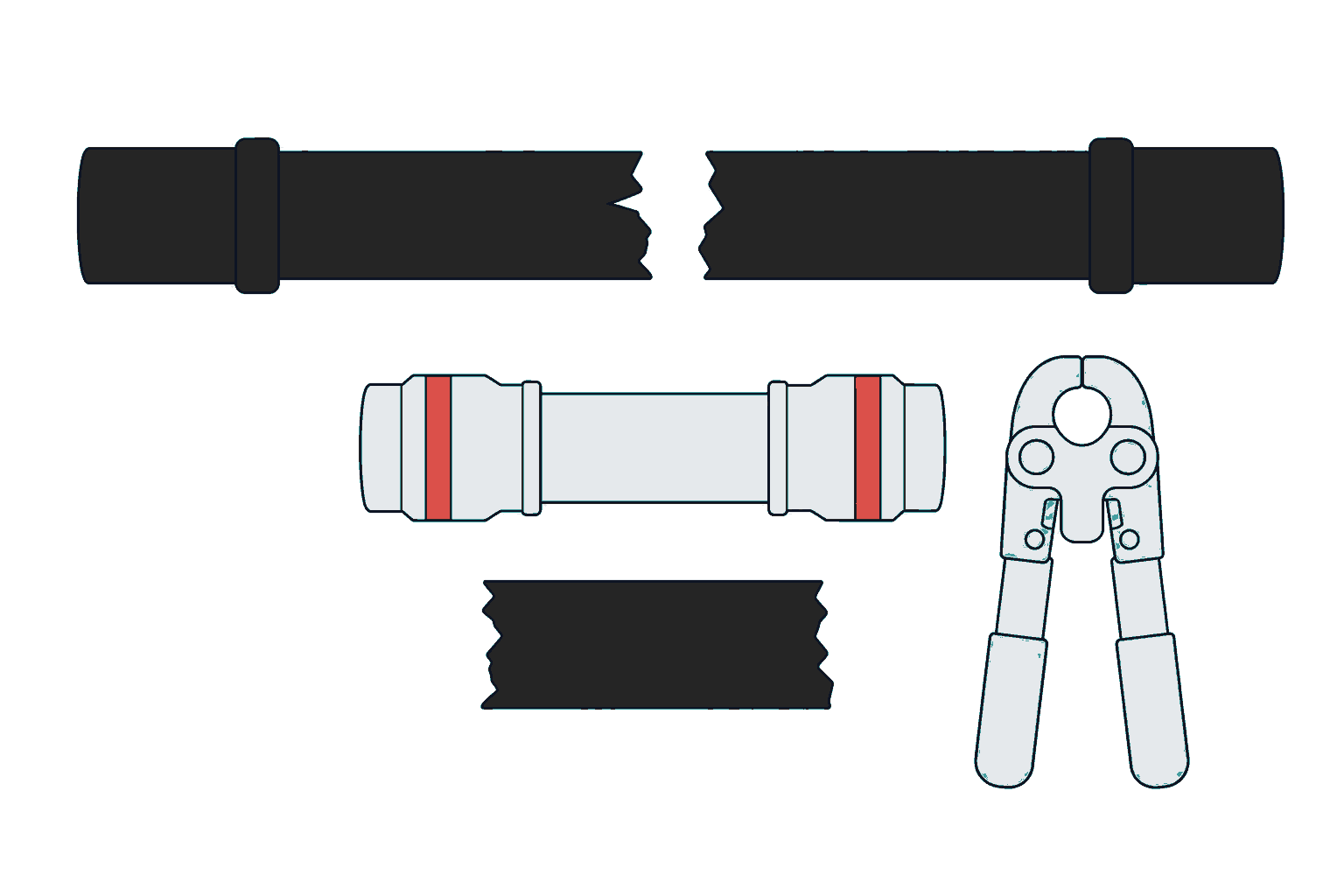
Usually a spot repair: cut out the leaking section, sweat or press a new section in place. If we’re seeing multiple pinholes in short succession, it’s often worth considering a localized re-pipe of that area rather than chasing individual leaks.
Galvanized replacement
We don’t patch galvanized in most cases. The rest of the pipe is corroded and the next leak is coming soon. We typically replace sections or full runs with PEX (faster install, more flexibility) or copper (when aesthetics in exposed runs matter).
PEX repair and re-pipe
PEX is forgiving. Spot repairs are fast: cut, crimp, done. Full re-pipes with PEX move quickly because the material can snake through existing wall cavities without extensive demolition. For a medium-sized home, a full PEX re-pipe is typically a 2- to 4-day job.
Frozen pipe prevention
Not a repair, but worth mentioning: the main causes of frozen pipe damage in our area are uninsulated pipes in exterior walls, pipes in unheated crawlspaces, and outdoor hose bibs that weren’t winterized. We add insulation, relocate vulnerable runs, install frost-proof hose bibs, and advise on cold-snap procedures.
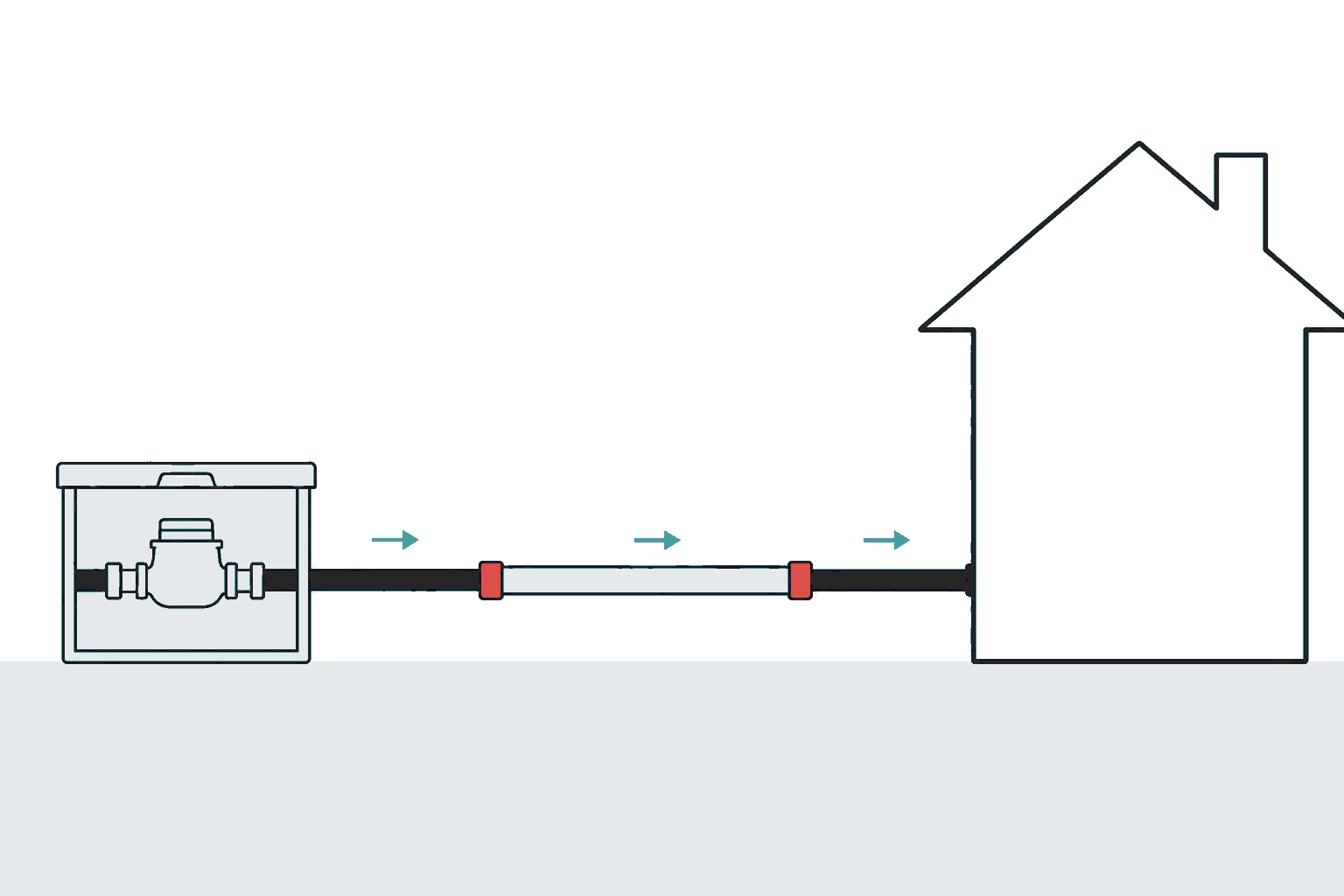
Water main replacement
The line from the city meter to the house. When this fails, you often see a wet spot in the yard that never dries, reduced pressure throughout the house, or a running water meter when nothing is on. Replacement involves excavating the line or, in some cases, using directional boring to avoid tearing up landscape.
THE DETAILSWhen does a full re-pipe make more sense than a spot repair?
A full re-pipe usually makes more sense than spot repair when multiple pinhole leaks occur within a year, galvanized pipe remains in the home, or a major remodel already has the walls open.
A few rules of thumb for when a full re-pipe makes more sense than chasing individual leaks:
- Multiple pinhole leaks in 12 months. The pipe is near end of life everywhere, not just where it’s leaking. Spot repairs will continue to multiply.
- Galvanized still present in sections. Replacing just the corroded bits usually means you’re back in 2 years for the next bit.
- Major remodel already happening. If walls are open for a kitchen or bathroom update, it’s cost-effective to repipe the rest of the house at the same time.
- Water pressure dropping year over year. Interior corrosion is narrowing the pipe and there’s no way to restore it.
- Insurance requirements. Some insurance carriers require re-pipe as a condition of continued coverage for homes past a certain age with original copper.
A full re-pipe isn’t cheap, but neither is a water damage claim. We talk through the math honestly. Sometimes the right answer is staged repairs, sometimes it’s doing the whole house at once.
OUR PROCESSHow does a pipe repair visit work?
Call or text to report the issue, and a tech identifies the leak on-site, quotes the repair, and often completes spot repairs the same visit.
Call or text (503) 822-5070. For an active leak, shut off the water if you can safely do so, then call.
On site: identify the leak, expose enough of the pipe to see the damage, quote the repair. Spot repairs often complete in the same visit. Larger jobs get scheduled after quote approval.
Payment at the end: credit card or check.
OUR PROCESSWhy Sherwood for pipe work
Pipe work — especially repipes — is where being headquartered in Sherwood matters. Devin’s been a working plumber for close to 20 years and has worked on the same housing stock he grew up around. The 1970s copper in a Sherwood ranch behaves one way; the original galvanized still feeding second-floor bathrooms in postwar Tigard behaves another; the early PEX-A in a 2005 Villebois build has its own failure pattern. That context shapes the diagnosis every time.
We work with families across decades — uncles, grandparents, the next house down. A lot of our pipe work is the second or third generation in the same house. That means we know what’s already been replaced, what’s still original, and what’s about to fail. We diagnose first, then quote. And if a full repipe is overkill for what’s wrong, we’ll tell you that too.
ABOUT SHERWOOD PLUMBINGAbout the shop
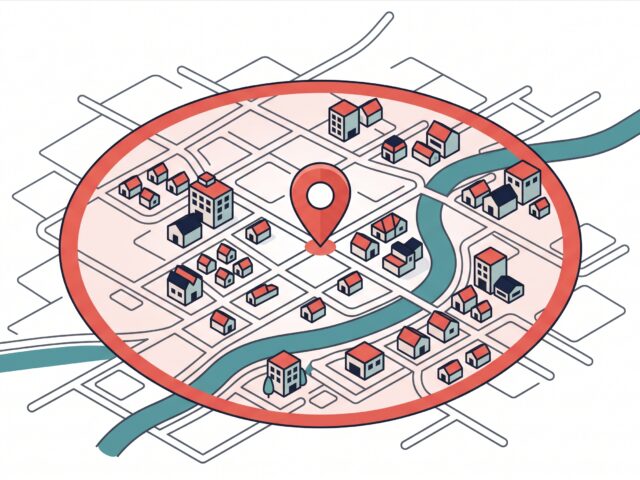
Sherwood Plumbing has been running since 2013 under Devin Drew Adams. We’re headquartered in Sherwood, the only plumbing company actually based in town. Our techs know the housing stock around here: the 1970s gas tank in a Sherwood ranch, the 2015 tankless in a Villebois build, the electric tank in a Cedar Hills postwar home. That local knowledge is the difference between a diagnosis that takes 20 minutes and one that takes two hours.
We carry $1,000,000 in general liability through Contractors Bonding & Insurance. Oregon CCB license #200851 (Plumbing, Residential RGC General Contractor). PB1381 with the Oregon Building Codes Division. $25,000 surety bond. 220 Google reviews at 4.7 stars.
FREQUENTLY ASKED QUESTIONSFrequently asked questions
We don’t quote pipe work over the phone — too many variables in pipe age, material, accessibility, and house layout. We come out, see what we’re actually working with, and give you a written estimate before any work starts. For a spot repair you’re billed on completion. For a full-house repipe (typically a 2- to 4-day job), we collect a deposit at the start and work through a milestone pay schedule so the cost is predictable as the work progresses.
Sometimes mostly, not entirely. PEX can snake through existing cavities to minimize drywall opening. We still need access at manifolds, tie-ins to fixtures, and sometimes at branch points. We aim to keep patches minimal and coordinate with a drywall finisher for closure.
For residential supply lines, PEX has proven itself over 25+ years of use. It’s resistant to freeze damage (expands without bursting as readily), doesn’t corrode, installs faster, and costs less. Copper still has its place for exposed runs where aesthetics matter.
Signs: low pressure at fixtures, discolored water (brown or rusty), visible corrosion on exposed pipe, or recurring leaks. If you’ve got original galvanized supply in a pre-1960s home, replacement is usually a matter of when, not if.
Risk is moderate. Hard freezes happen every few winters. Houses with exposed pipe in uninsulated crawlspaces or exterior walls are the most vulnerable. Winterizing hose bibs and knowing how to shut off your main supply are the biggest protections.