
Leak Detection & Repair in Sherwood, OR
OVERVIEWLeak Detection & Repair in Sherwood, OR
Sherwood Plumbing locates and repairs hidden slab, in-wall, supply-line, and main water line leaks across Sherwood, Tualatin, Tigard, and Washington County without tearing up your home. A leak you can see is a plumbing job. A leak you can’t see is a detective job first.
The water bill jumped for no obvious reason. There’s a warm spot on a tile floor. A wall sounds hollower than it used to. Paint is blistering in a hallway. These are the calls where the fix is easy once we know where the leak is. Finding it is the hard part, and that’s what professional leak detection is actually about: locating the leak without tearing up the house to do it.
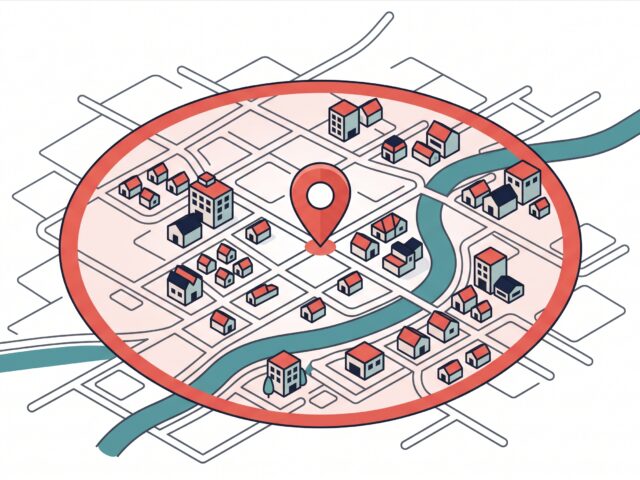
We work leak detection across Sherwood, Tualatin, Tigard, and the rest of Washington County. Most of the houses in our service area fall into a few categories: slab-on-grade builds from the 80s and 90s in Tualatin and Tigard, crawlspace homes throughout Sherwood proper, basement homes in older neighborhoods, and newer slab builds in Villebois and Charbonneau. Each has a different leak profile, and a different detection strategy.
NEED A PLUMBER NOW?Call or text (503) 822-5070
WHAT YOU NEED TO KNOWWhat kinds of leaks does Sherwood Plumbing detect?
We detect slab leaks, in-wall leaks, crawlspace and basement supply-line leaks, main water line leaks, exterior hose bib leaks, and silent toilet or fixture leaks.
Slab leaks
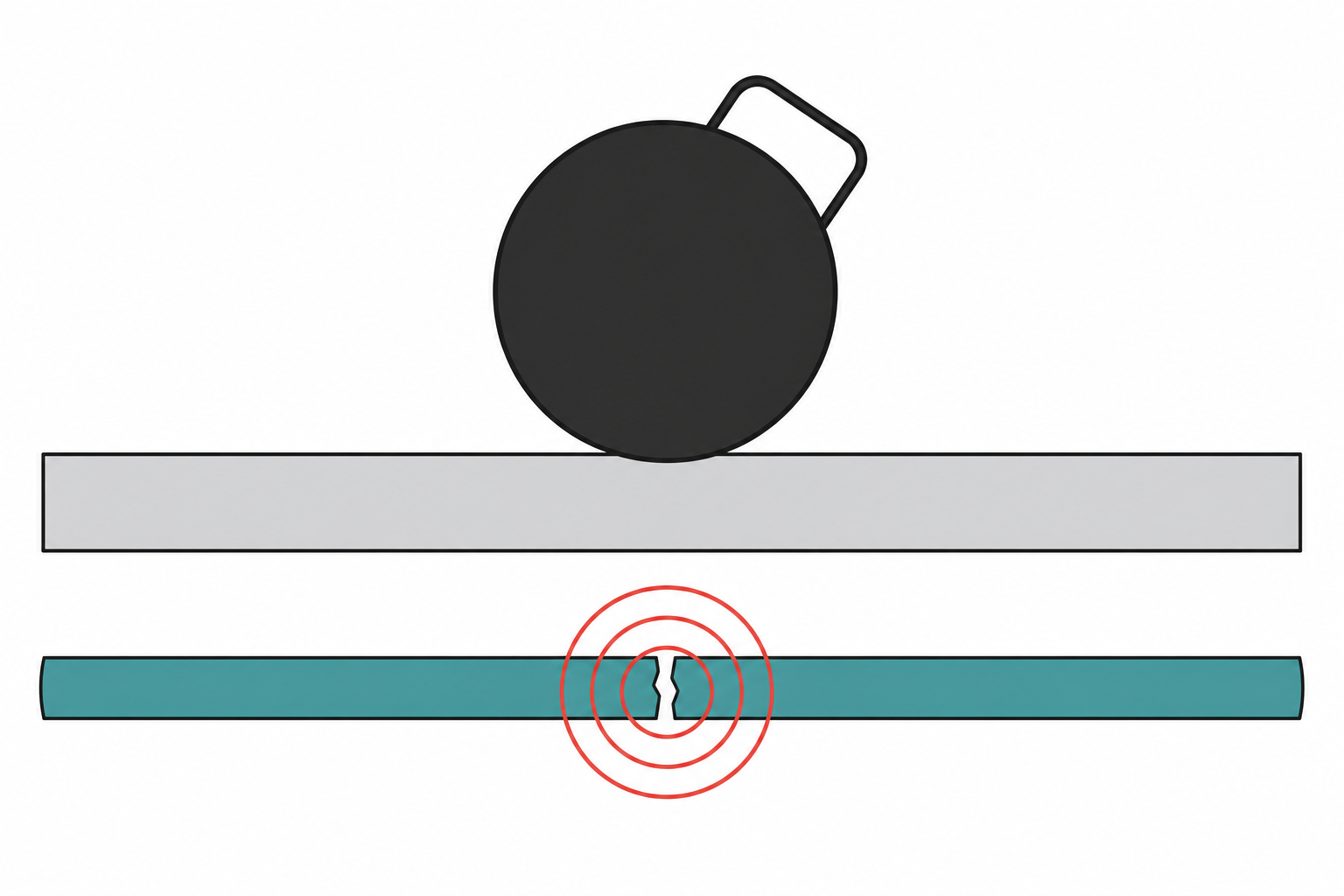
A slab leak is a leak in a pipe running through or under the concrete foundation. Common in mid-1980s and newer homes in this area. Symptoms: warm or cold spot on the floor, a continuous sound of running water when nothing is on, unexplained high water bill, cracking in floor tile. We use acoustic listening equipment and thermal imaging to locate the leak within a small area, then access through the slab at that one point rather than tearing up the entire floor.
In-wall leaks
Supply lines running behind drywall fail at fittings, elbows, or from nail strikes during long-ago renovations. Symptoms: staining on drywall, bubbling paint, mold smell, a soft spot in the ceiling below an upstairs bathroom. We locate with moisture meters and cameras, open a minimal-size access, repair, and hand off to a drywall finisher for closure if you want one.
Supply line leaks in the crawlspace or basement
Easier to find because the pipe is accessible. Copper pinhole leaks, PEX fitting failures, old galvanized corrosion, frozen-pipe splits from past winters. We fix in place. Most crawlspace supply leaks are 30 minutes to a few hours of work.
Main water line leaks
The line from the city meter to the house. Symptoms: a wet patch in the yard that never dries, pressure drop at all fixtures, or a running meter when no water is being used. We trace the line, locate the leak, excavate just that section if it’s on your side of the meter, and replace with new pipe. For broader pipe replacement work, see our pipe repair & replacement page.
Hose bib and exterior leaks
Sometimes it’s not a leak inside the house. A hose bib that’s been dripping all season, an irrigation feed that wasn’t winterized properly, a cracked shut-off valve in a meter box: all of these show up on the water bill and get confused for indoor leaks.
Toilet and fixture leaks
The silent kind. A flapper that doesn’t seat properly can waste 200 gallons a day with no visible drip. A wax ring failure under a toilet shows up as a soft spot in the subfloor months later. We diagnose with dye tests and visual inspection.
If water is actively running and you need to act right now, start here: what to do first in a plumbing emergency.
OUR PROCESSHow do you find leaks without tearing up my house?
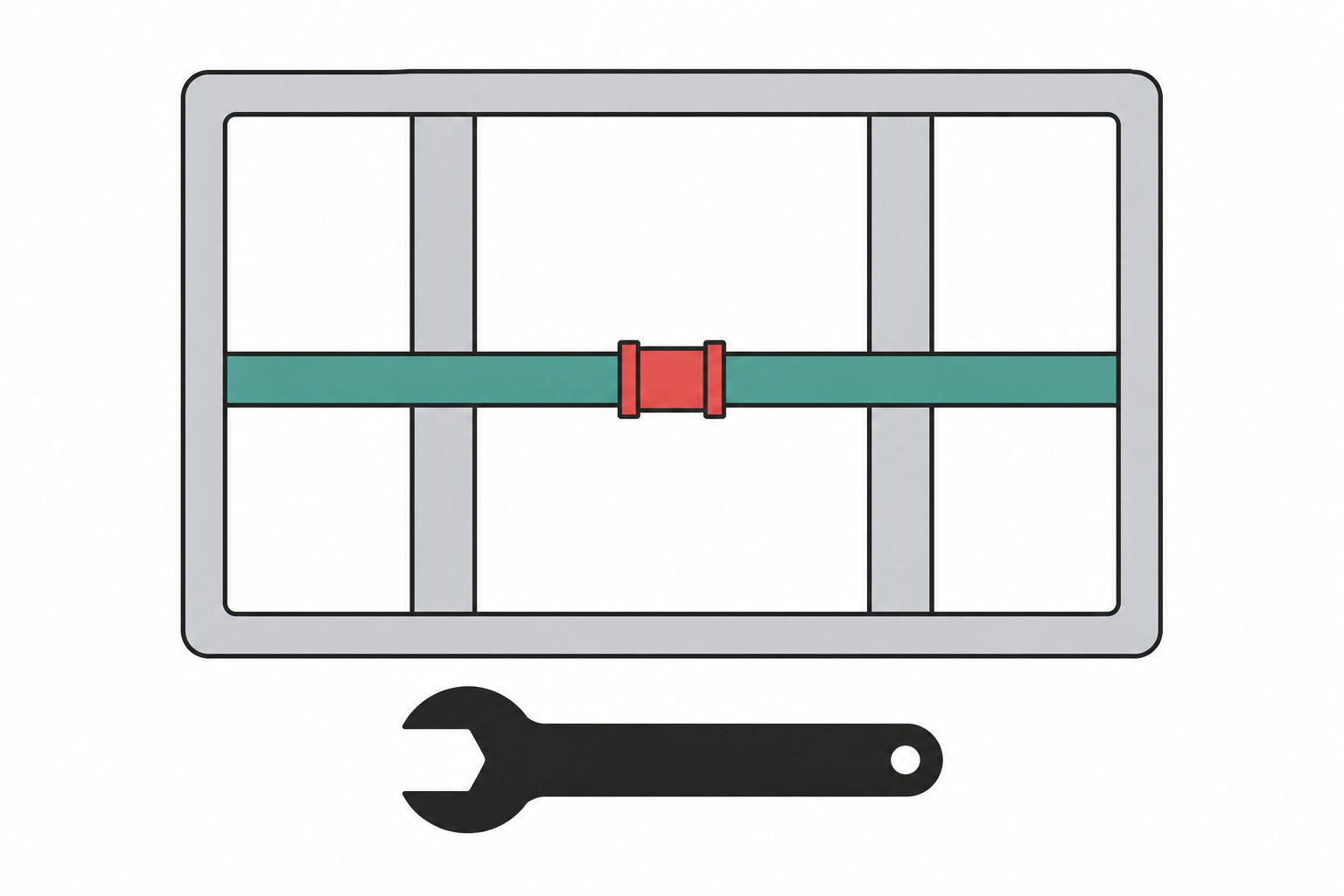
We find leaks using acoustic listening equipment, thermal imaging, moisture meters, cameras, pressure testing, and dye tests, then combine the results to narrow the leak to within inches. The point of professional leak detection is minimizing collateral damage. A house with a slab leak doesn’t need the whole floor pulled up. It needs the leak found to within a few inches, access cut at that point, and the pipe repaired or rerouted.
Our toolkit:
- Acoustic listening equipment that amplifies the sound of water escaping a pressurized pipe, audible through concrete or drywall.
- Thermal imaging to spot temperature differences that indicate hot-water-line leaks.
- Moisture meters to quantify wet material behind finishes.
- Cameras and borescopes for wall cavities and hard-to-access spaces.
- Pressure testing to confirm the leak is on the supply side and to narrow which branch is failing.
- Dye tests for toilets and fixtures.
We pair the tools. Acoustic finds the noise, thermal confirms the heat signature, moisture meter narrows the affected area. The combination gets us within inches, not feet.
THE DETAILSWhat are the repair options after a leak is found?
Repair options are a direct spot repair, rerouting the line, or a partial or full re-pipe, depending on where the leak is and the pipe’s condition. Once we’ve located the leak, there are usually two or three repair options. For a slab leak, that might be:
- Direct spot repair. Cut the slab at the leak, repair the pipe, patch the concrete. Fastest, least disruptive if the leak is isolated.
- Reroute. Abandon the in-slab run and replace it with a new run through the wall or attic. Often the right call if the original pipe is aging copper, since pinhole leaks tend to repeat.
- Partial or full re-pipe. For a home with multiple failures in a short period, rerunning all the supply lines with PEX is often cheaper long-term than chasing individual leaks.
For in-wall leaks, it’s usually direct repair through a small access. For main water line leaks, it’s excavation and replacement of the affected section or the full line, depending on pipe age and condition.
We walk through the options, give you honest tradeoffs on each, and let you decide.
OUR PROCESSHow does a leak detection visit work?
Call or text, tell us what you’re seeing, and a tech listens, measures, and tests to find the leak before walking you through repair options with numbers. Call or text (503) 822-5070. For an active leak, tell us what you’re seeing when you call (water on the floor, a running meter, a wet yard) so we bring the right equipment.
On site, we start with the symptoms and work backward. Listen, measure, test. Find the leak. Show you exactly where it is. Walk through repair options with numbers. Nothing starts until you’ve decided.
Payment at the end: credit card or check.
WHAT YOU NEED TO KNOWWhy choose Sherwood Plumbing for hidden leak detection?
Sherwood stands out on hidden leaks because of close to 20 years of local diagnostic experience, tools that narrow the search fast, and a stocked truck that can often start the repair the same visit. Hidden leaks are the calls where shops without depth bail out. We don’t.
Devin’s been a working plumber for close to 20 years and has seen the failure modes: pinhole-prone copper runs in 1980s slabs, the way water tracks sideways under tile and pops out three rooms away, the false-positive thermal signatures from sun-warmed exterior walls. The depth shows up in how fast we narrow the search.
We work with a stocked truck, so when the leak’s found, the repair often starts the same visit. And we walk you through what we’re seeing as we go (the moisture meter readings, what the camera shows behind the wall) so you understand why the bill is what it is.

ABOUT SHERWOOD PLUMBINGAbout the shop
Sherwood Plumbing has been running since 2013 under Devin Drew Adams. We’re headquartered in Sherwood, the only plumbing company actually based in town. Our techs know the housing stock around here: the 1970s gas tank in a Sherwood ranch, the 2015 tankless in a Villebois build, the electric tank in a Cedar Hills postwar home. That local knowledge is the difference between a diagnosis that takes 20 minutes and one that takes two hours.
We carry $1,000,000 in general liability insurance with Federated Mutual. Oregon CCB license #200851 (Plumbing, Residential RGC General Contractor). PB1381 with the Oregon Building Codes Division. $25,000 surety bond through Contractors Bonding & Insurance. 220 Google reviews at 4.7 stars.
FREQUENTLY ASKED QUESTIONSFrequently asked questions
We don’t quote leak detection over the phone. There are too many variables in what’s actually behind the wall or under the slab. We come out, listen, measure, and give you a written price before any work starts. For straightforward service-call detection-and-repair, you’re billed on completion. For larger projects involving rerouting or partial re-pipes, we collect a deposit and work off a milestone pay schedule.
Usually yes, at least to within inches. Access still has to be cut to make the repair, but we minimize the opening.
Rare but it happens, usually with intermittent leaks that don’t express during our visit. In those cases we leave pressure gauges or moisture loggers on site and return when conditions align. We talk through the follow-up plan with you on-site so you know what to expect.
Not always. Irrigation systems, humidifiers, pool fill, water softener regeneration, and even a constantly running toilet can all drive up a bill without being a “leak” in the classic sense. We check the obvious things before we start cutting.
Most residential detections are 1 to 3 hours. Slab leaks with multiple possible locations can take longer.
Sometimes. A leaking tank, a failed expansion tank, or a corroded T&P valve can all soak the area around the unit. If you suspect the water heater itself, see our water heater repair & replacement page.